

 March 04, 2026
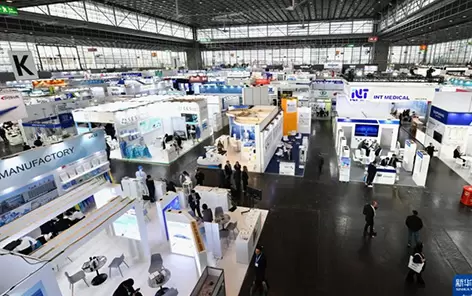
The 2025 Düsseldorf International Medical Equipment Exhibition Opens
Through high-precision machining and reliable welding processes, plastic components of varying materials and structures can be efficiently integrated to form sealed, insulated, and lightweight assemblies. These assemblies effectively meet the requirements for internal spatial layout and multi-functional integration within complex equipment systems.
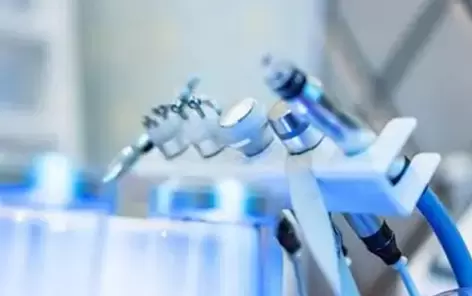
In terms of application scenarios, precision polymer components and plastic welding techniques are widely utilized in the semiconductor and medical equipment industries. Within semiconductor equipment, components such as insulators, spacers, fluid channels, and clamping structures benefit from the use of polymer materials, achieving properties such as electrical insulation, corrosion resistance, and lightweight design. Furthermore, composite welding ensures structural integrity and leak-tightness, making these components suitable for long-term operation within cleanroom environments. In medical equipment—including housings, internal cavities, integrated tubing systems, and functional module brackets—plastic welding enables the creation of seamless, monolithic structures. These structures are easy to clean, free of dead corners, and corrosion-resistant, thereby complying with the stringent hygiene and safety standards required for medical devices. Multi-material integrated assemblies can simultaneously fulfill functions such as structural support, electrical insulation, fluid routing, and cable management; this reduces the overall number of assembly parts while enhancing both the integration level and operational stability of the equipment.
Regarding performance, precision polymer components feature high machining accuracy and dimensional stability. Complex structures can be formed in a single molding process, and—when combined with precise datum control—ensure exceptional assembly accuracy. The composite plastic welding process is robust and reliable; weld seam strength approaches that of the base material, and the resulting seals exhibit superior integrity—preventing both liquid leakage and gas permeation—making them suitable for use in both pressurized and vacuum environments. The welding process itself is free of adhesives, rivets, and contaminants, thereby preserving the material's inherent cleanliness and biocompatibility—qualities essential for the demanding environments found in the semiconductor and medical sectors. These components demonstrate strong material adaptability, allowing for the welding of various engineering plastics and high-performance polymers to reliably integrate materials of differing hardness and functionality. Furthermore, the assemblies are lightweight, chemically resistant, and resistant to aging, ensuring stable and reliable performance over extended periods of use.
The key advantages of precision polymer components and plastic welding lie in their high level of integration, cost optimization, efficient delivery, and consistent quality. By consolidating multiple individual parts into a single integrated assembly, the processes of machining, assembly, and debugging are streamlined; this results in shortened production cycles and reduced overall costs. The monolithic structural design minimizes the risk of leaks and reduces the number of potential failure points, thereby enhancing both the reliability and service life of the equipment. The manufacturing processes are mature and stable, ensuring high consistency in mass production and effectively meeting the large-scale production demands of the semiconductor and medical industries.
We provide a comprehensive, one-stop solution—spanning structural design, material selection, process optimization, and mass delivery—to rapidly address our clients' customized requirements.
Amidst the trends toward equipment miniaturization, integration, and lightweighting, precision polymer components and composite plastic welding offer innovative structural solutions for equipment in sectors such as semiconductors and medical technology. Leveraging their advantages of high-efficiency integration, reliability, stability, cleanliness, and safety, these technologies play a pivotal role in driving the continuous enhancement of product performance.
 March 04, 2026
 March 04, 2026
 March 02, 2026
 March 04, 2026
Encountering problems or challenges? Please contact us!